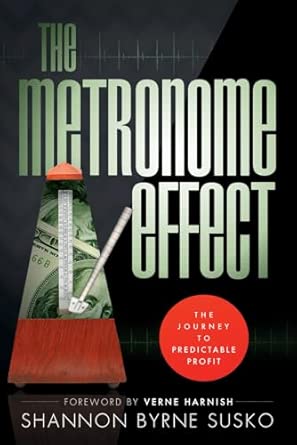
“The Metronome Effect” by Shannon Byrne-Susko
Who is it for?for those looking for a systematic approach to achieving business harmony and growth
“The Metronome Effect” by Shannon Byrne Susko presents a dynamic and structured approach to achieving business growth and sustainability. This book is a valuable resource for business leaders and entrepreneurs who aim to create a harmonious balance between strategy, execution, and culture in their organisations.
Susko, with her extensive experience in business leadership, articulates a clear methodology for aligning these three critical aspects of business. She introduces the concept of the ‘Metronome Effect’—the idea that like a metronome which keeps time in music, a business must find its rhythm in strategy, execution, and culture to maintain steady and sustainable growth. The book is rich with practical tools, frameworks, and real-life examples that guide leaders in implementing this balanced approach.
The key challenge for readers is the practical application of these concepts in their unique business contexts. The Metronome Effect requires a deep, ongoing commitment to synchronising strategy, execution, and culture. This synchronisation is not a one-time fix but an ongoing process that demands continual attention and refinement.
Another significant challenge is the cultural shift that this approach necessitates. For many organisations, especially those entrenched in traditional operational models, adopting a rhythm that equally prioritises strategy, execution, and culture can be a substantial change. This change demands not just an adjustment in processes and strategies but also a shift in mindset and behaviour at all levels of the organisation.
Moreover, Susko’s methodology, while comprehensive, requires a level of discipline and rigour in its execution. Maintaining the ‘metronome’ in the face of business pressures, market changes, and internal dynamics can be demanding. Leaders must not only understand the theoretical framework Susko presents but also be adept at adapting and applying these principles consistently over time.
In conclusion, “The Metronome Effect” offers an insightful and systematic approach to achieving business harmony and growth. However, the real challenge for readers lies in the diligent application of these principles and sustaining this balanced approach amidst the complexities of running a business. For those willing to embrace this challenge, the book serves as an essential guide to building a resilient and thriving organisation.